
Powered By



 Continue with Facebook
Continue with Email
Continue with Facebook
Continue with Email
Treatment for prostate cancer has changed significantly in recent years. Poly (ADP-ribose) polymerase (PARP) inhibitors are a promising group of oral medicines now used to treat some people living with advanced prostate cancer. PARP inhibitors may help certain individuals live longer, especially when other prostate cancer treatments are no longer effective.
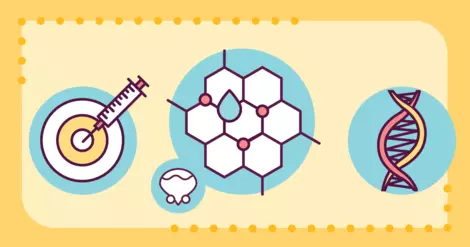
PARP inhibitors are part of a newer type of cancer treatment called targeted therapy. Unlike traditional cancer medicines that affect the entire body, targeted therapies are designed to specifically attack cancer cells while leaving most healthy cells unharmed.
For people whose prostate cancer cells have specific genetic mutations (changes), PARP inhibitors offer new treatment options. These medications work best in people whose cancer has changes in genes that help repair DNA, such as BRCA1 or BRCA2.
All cancers start with changes in the DNA of certain cells. When the instructions for cell growth and repair become mixed up, faulty cells can grow out of control, which may lead to cancer.
Targeted therapy is a type of medicine made to find and attack cancer cells with some specific DNA changes. In contrast, chemotherapy attacks all fast-growing cells, including healthy ones like those in hair, skin, and the digestive system.
You can think of chemotherapy as a shotgun that affects everything in its path. Targeted therapy works more like a sniper, aiming precisely at the problem inside cancer cells and trying to spare most healthy cells.
Doctors have used targeted therapies for several years to treat cancers such as breast and ovarian cancer. Now, targeted therapy is also helping some people living with prostate cancer.
Inside every cell, there’s a repair system that fixes small DNA mistakes that happen every day. One important part of that system is a protein called poly (ADP-ribose) polymerase.

In prostate cancer cells that have certain problems with DNA repair — such as mutations in genes like BRCA1, BRCA2, or ATM — the repair process doesn’t work correctly. When a PARP inhibitor blocks the PARP protein, these cancer cells lose their remaining ability to fix their DNA themselves, causing them to eventually die.
Put simply, PARP inhibitors are pills that block the “repair crew” in cancer cells. Most healthy cells can still repair their DNA in other ways, but cancer cells with these genetic weaknesses cannot. Over time, this can slow down or stop the growth of prostate cancer.
PARP inhibitors are used mainly for people living with advanced prostate cancer, especially when the cancer has become metastatic (spread to other parts of the body) or has recurred (returned after treatment).
These medicines are most often used when prostate cancer becomes metastatic castration-resistant prostate cancer (mCRPC). This means the cancer keeps growing, even though hormone therapy has already lowered testosterone levels as much as possible.
Doctors may recommend PARP inhibitors for people whose cancer cells have mutations in DNA repair genes, such as BRCA1, BRCA2, or other genes known as homologous recombination repair (HRR) genes.
Sometimes these drugs are used alone, but more often they are given alongside hormonal therapy, such as abiraterone (Zytiga) or enzalutamide (Xtandi), to make the treatment more effective.
As of the end of 2025, several PARP inhibitors are approved by the U.S. Food and Drug Administration (FDA) for treating prostate cancer. Some may be used in combination with hormonal therapy to improve results.
Olaparib (Lynparza) is approved for adults living with mCRPC that has BRCA1, BRCA2, or other HRR gene mutations. It can be taken alone or together with abiraterone and prednisone. Olaprib is taken by mouth twice daily.
Rucaparib (Rubraca) is approved for adults with mCRPC who have BRCA gene mutations and who have previously been treated with androgen receptor-directed therapy (such as hormone therapy that lowers or blocks testosterone). Rucaparib is taken by mouth twice daily.
Niraparib/abiraterone (Akeega) was approved in 2025 for adults with prostate cancer that has a BRCA2 mutation. It combines two powerful medications, one that targets DNA repair and another that lowers levels of the sex hormone androgen. It’s given together with prednisone.
Talazoparib (Talzenna) was approved in 2023 to be used in combination with enzalutamide for adults whose prostate cancer cells have certain HRR gene mutations. This combination can slow cancer growth and may help people live longer.
Researchers are testing new combinations and follow-up drugs in clinical trials.

PARP inhibitors are usually used after standard hormone therapy stops working, but some combinations are now approved for use earlier in treatment. Here is how they fit into prostate cancer care:
Treatment with PARP inhibitors is generally continued as long as the medicine is still working and side effects remain manageable. PARP inhibitors are usually taken daily, and doctors typically keep people on hormonal therapy during treatment, because prostate cancer often still depends partly on testosterone to grow.
Most doctors recommend genetic testing for cancer cells before starting a PARP inhibitor. These medicines work best when prostate cancer cells have certain gene changes.
Genetic testing looks for mutations in genes such as:
These genetic tests can generally be done with a blood sample. If testing shows one of these mutations, your doctor may recommend a PARP inhibitor. If not, you may still qualify for other prostate cancer treatment options or a clinical trial.
All cancer treatments can cause side effects, but most people tolerate PARP inhibitors fairly well. The most common include:
Less common but more serious side effects can include:
Your cancer care team will regularly check blood counts and can adjust doses if side effects become a problem.
Scientists are working to improve how PARP inhibitors may be used more effectively for prostate cancer. Ongoing studies are exploring several new approaches, including:
If you’re interested in joining a study, you can ask your oncologist (cancer specialist) or visit the National Cancer Institute (NCI) website to search for open clinical trials.
If you’d like to know more about whether a PARP inhibitor might be a good treatment option for you, consider bringing these questions to your next appointment:
Your doctor can help you understand whether a PARP inhibitor might fit into your treatment plan and discuss what to expect if it becomes part of your care.
PARP inhibitors represent a hopeful step forward in the fight against prostate cancer. For many people, these medications are helping to slow the disease and extend life, especially when other treatments have stopped working.
Researchers are continuing to study new combinations and next-generation drugs that may bring even better results in the years ahead. Because every person’s cancer is different, testing for gene changes like BRCA1 and BRCA2 can help doctors choose treatments that are most likely to work.
If you or someone you love is living with advanced prostate cancer, talk with your healthcare team about whether PARP inhibitors or a clinical trial might be an option.
On MyProstateCancerTeam, people share their experiences with prostate cancer, get advice, and find support from others who understand.
Have you asked your doctor whether a targeted treatment like a PARP inhibitor could be part of your plan? Let others know in the comments below.
Get updates directly to your inbox.




 Continue with Facebook
Continue with Email
Continue with Facebook
Continue with Email
Continue with Facebook
Continue with Email
Continue with Facebook
Continue with Email
Become a member to get even more





 Join
Join

 Your Privacy Choices

This is a member-feature!
Sign up for free to view article comments.
We'd love to hear from you! Please share your name and email to post and read comments.
You'll also get the latest articles directly to your inbox.