
Powered By



 Continue with Facebook
Continue with Email
Continue with Facebook
Continue with Email
Prostate cancer often does not cause symptoms in its early stages. When symptoms do appear, they can be mistaken for common or everyday health issues. Even so, symptoms shouldn’t be ignored, especially for people over 50, those with a family history of prostate cancer, or anyone with other prostate cancer risk factors.
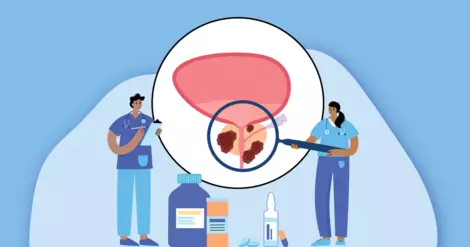
Many symptoms of prostate cancer are related to the prostate’s location in the body and how cancer can affect nearby tissues and organs. Other symptoms may develop if the cancer metastasizes (spreads) to other parts of the body. Prostate cancer starts in the prostate, a small gland in the reproductive system found below the bladder and around the urethra (the tube that carries urine out of the body). The prostate is also located near the rectum.
In this article, we’ll cover possible signs and symptoms of prostate cancer, explain why they happen, and encourage you to talk with your doctor if you notice any changes.
One early warning sign that may be related to prostate cancer is difficulty starting to urinate. You might stand at the toilet and wait before anything happens. Some people feel they have to push or strain to get the flow of urine started.
This can happen if prostate cancer grows inside the prostate and presses on the urethra. Pressure from cancer cells can narrow this tube, slowing down or blocking the flow of urine. Although this symptom can be caused by prostate cancer, it is more often due to benign prostatic hyperplasia (BPH), a common, noncancerous enlargement of the prostate that can develop with age.
A weak urine stream may feel like urine is dribbling out instead of flowing freely. The stream may also stop and start on its own. This can happen because the prostate wraps around the urethra. If prostate cancer grows and presses on this tube, it can narrow the urethra and slow down the flow of urine.
Although a weak urine stream can be a sign of prostate cancer, it is more often caused by noncancerous conditions, such as BPH.
Some people notice they need to urinate more often than usual or feel a sudden, strong urge to go right away. You might also feel like your bladder is full even after you just went. These symptoms may happen more often at night.
Like other urinary symptoms, this can happen when pressure on the urethra keeps the bladder from fully emptying. These symptoms are common and are more often caused by noncancerous bladder problems, such as:
However, any new or worsening urinary changes should be checked by your doctor.
Waking up more than once at night to urinate (called nocturia) can disrupt sleep and leave you feeling tired during the day. Nocturia happens when the bladder can’t fully empty or becomes irritated. Prostate cancer can sometimes contribute to this by narrowing the urethra and changing how the bladder works.
Nocturia is very common in older adults and is usually not caused by cancer. Other health conditions, such as diabetes, are also common causes of waking up at night to pee.
Pain or burning when you urinate can feel like stinging, burning, or discomfort as urine passes out of the body. This symptom usually happens because of irritation or inflammation in the urinary tract.
Prostate cancer can sometimes cause pain or burning during urination if it affects nearby tissues. However, infections, such as UTIs, or prostatitis are much more common causes.
Hematuria (blood in the urine) can make urine look pink, red, or brown. Sometimes, blood is only found during a urine test and can’t be seen with the naked eye (this is called microscopic hematuria).
Prostate cancer can cause blood in the urine if a tumor damages nearby blood vessels. However, this symptom is uncommon in early-stage prostate cancer and is more often caused by other conditions, such as UTIs or kidney stones.
Blood in the semen can cause it to look rust-colored, pink, or red. While this can be alarming, it is not a common symptom of prostate cancer. In fact, blood in the semen makes up about 1 out of every 100 urologic (urinary and reproductive system-related) symptoms. Most cases of blood in the semen are linked to infection or inflammation, rather than cancer.
Pain during or after ejaculation can feel like aching or sharp discomfort in the penis, pelvis, or deep inside the body.
Prostate cancer may cause pain with ejaculation if the cancer irritates the prostate or nearby nerves. However, this symptom is more likely to appear in later stages of prostate cancer. More often, painful ejaculation is caused by prostatitis or other noncancerous prostate conditions.
Painful ejaculation is not normal and should be checked by your healthcare provider, especially if it happens often or occurs along with other symptoms of prostate cancer.
Erectile dysfunction (ED) means having trouble getting or keeping an erection. ED becomes more common as people get older. In prostate cancer, ED is more common in the advanced stages, because cancer can affect the nerves, blood flow, or hormone levels needed for erections.
ED is more often linked to treatments for prostate cancer, such as surgery, radiation, or hormone therapy, than to the cancer itself. However, this symptom is sometimes temporary, and some people may regain erectile function after treatment and recovery.
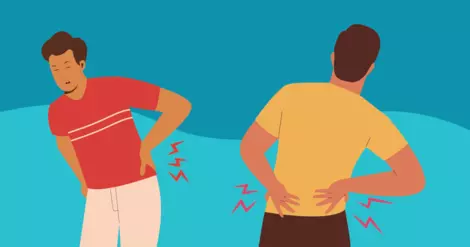
Deep, aching pain in the lower back, hips, ribs, or chest can sometimes be a sign of advanced prostate cancer. This pain may come and go at first and is often felt in the bones. About 6 percent of people with metastatic prostate cancer experience bone pain as a first symptom.
Losing weight without trying to or feeling very tired for long periods of time can sometimes happen with advanced prostate cancer. Cancer can change how the body uses energy and nutrients, which may lead to weight loss and low energy. Some people notice a loss of appetite over time. Fatigue can also develop if cancer lowers the number of red blood cells (causing anemia).
Many urinary problems can be caused by factors other than prostate cancer. For example, lower urinary tract symptoms — such as needing to pee more often, feeling an urgent need to pee, or difficulty starting urination — are more often linked to noncancerous conditions. This means symptoms alone can’t confirm a prostate cancer diagnosis. A diagnosis relies on tests like a prostate biopsy (removing a small sample of tissue to look at under a microscope).
It’s a good idea to make an appointment with your healthcare provider if you have any of the following:
Some people should consider having their prostate checked before age 50. You may be at higher risk for prostate cancer if you:
If your symptoms, family history, or other prostate cancer risk factors raise concern, your doctor may start with screening tests. The most common are a prostate-specific antigen (PSA) blood test and a digital rectal exam (DRE), which checks the prostate through the rectum. Depending on the results, your doctor may recommend a prostate biopsy to confirm or rule out prostate cancer.
Treatment for prostate cancer depends on whether the cancer is found early or has spread. Options may include:
Your oncology team will guide you through your treatment options and help you choose what’s best for you and your goals. When found early, prostate cancer is highly treatable. More than 99 percent of people diagnosed with early-stage prostate cancer live at least five years after their diagnosis.
On MyProstateCancerTeam, people share their experiences with prostate cancer, get advice, and find support from others who understand.
What signs or symptoms of prostate cancer have you experienced? Let others know in the comments below.
Get updates directly to your inbox.


What is a normal PSA for an 83 year old
 Continue with Facebook
Continue with Email
Continue with Facebook
Continue with Email
Continue with Facebook
Continue with Email
Continue with Facebook
Continue with Email
Become a member to get even more





 Join
Join

 Your Privacy Choices

This is a member-feature!
Sign up for free to view article comments.
I have not received my diagnoses if I do have prostate cancer but after the. Biopsy a week ago theyvsagid I would urinate little blood in my urine and season and I did but I also have a ingenious… read more
We'd love to hear from you! Please share your name and email to post and read comments.
You'll also get the latest articles directly to your inbox.