
Powered By



 Continue with Facebook
Continue with Email
Continue with Facebook
Continue with Email
Between 15 percent and 27 percent of people with prostate cancer also live with cardiovascular disease. This includes a wide variety of diseases that affect the heart and blood vessels, including coronary artery disease (heart disease), stroke, hypertension (high blood pressure), heart failure, and more. In fact, for many people with prostate cancer, heart health can have a more serious impact on long-term well-being than the cancer itself.
People who have prostate cancer have a higher risk of developing heart disease. This may be due to shared risk factors or treatment side effects. That’s why it’s important to understand the connection between prostate cancer and heart disease. That way, you can have informed conversations with your doctors and make wise decisions about your healthcare.
Prostate cancer and heart disease can occur together. This could be because they share some risk factors.
Smoking is a risk factor for both prostate cancer and heart disease. Smoking can lead to a lot of different harmful health effects, which could contribute to the development of both of these conditions. If you’re a smoker with prostate cancer and you want to lower your risk of developing heart disease too, talk to your doctor to come up with a plan to stop smoking. Keep in mind that there are many ways to help you stop, even if it seems difficult at first.
Being older is also a risk factor for both conditions. Men under 40 years old have a low risk for prostate cancer, but that risk goes up after they turn 50. Close to 60 percent of all prostate cancer is diagnosed in men who are over 65. While heart disease is possible at any age, the chances of developing it go up as you get older.
Similarly, certain foods in your diet could also contribute to the development of both conditions. Eating foods with high amounts of cholesterol, trans fat, and saturated fat raises your risk of heart disease, while consuming a lot of dairy products may raise your risk for prostate cancer. Some dairy products are high in trans fats and saturated fats, so these may raise your risk of developing both conditions.
There are some risk factors for prostate cancer and heart disease that may or may not be shared. In most cases, more research needs to be done to figure out if these are risk factors for both conditions.
While obesity is definitely connected to heart disease, the possible connection to prostate cancer is a little more complicated. Some studies indicate that people diagnosed with obesity may have a higher risk of having more advanced prostate cancer and poorer outcomes from prostate cancer. However, having obesity doesn’t necessarily increase the risk of developing prostate cancer. All in all, more research is needed to know more about this connection.
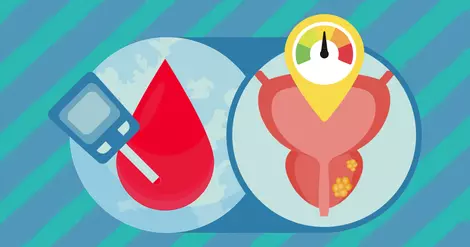
Another possible shared risk factor is diabetes. Diabetes is a known risk factor for heart disease, but the research on its connection to prostate cancer is more complicated. One study showed that people who have had type 2 diabetes for a long time may have a lower risk for developing prostate cancer, specifically early-stage cancer. However, some research suggests that men who already have more aggressive prostate cancer and diabetes may have a slightly higher risk of more serious complications, like death.
This conflicting information can make it difficult to understand exactly how diabetes is connected to prostate cancer.
Both heart disease and prostate cancer appear to have a genetic component. People who have a family history of prostate cancer are more likely to develop it themselves, but many people with prostate cancer don’t have a family history. Heart disease may also run in families, though it’s difficult to tell if the condition is passed on genetically or if people in similar environments develop similar health issues.
Some prostate cancer treatments can also be linked to heart disease. Prostate cancer treatment often involves hormonal therapy. This is called androgen deprivation therapy, or ADT. It involves lowering the levels of the androgens (a type of hormone) in the body that make prostate cancer grow.
ADT may be associated with an increased risk of heart disease. ADT can affect your heart by:
All of these factors can contribute to an increased risk of developing cardiovascular issues. Some research says ADT raises your risk for high blood pressure, strokes, diabetes, heart attacks, and death due to heart disease, but the research is mixed.
In the end, more research needs to be done to fully understand the connection here and figure out how and when that connection applies. If your oncologist is recommending ADT and you’re concerned about your heart health, make sure to discuss your risk with them. Your team will usually recommend several regular tests to monitor your overall heart health while receiving treatment.
There are a few lifestyle changes you can make to lower your risk of developing heart disease or lower your risk of complications from heart disease. Talk to your oncology team to make sure these are all healthy and safe for you while living with prostate cancer.
If you’re concerned about worsening heart disease or developing heart disease while living with prostate cancer, talk to your oncology team today. They may refer you to a cardiologist who can help you monitor your heart health as you treat prostate cancer. They can also help you get regular follow-up monitoring, if you need it, so you’ll always know how healthy your heart is.
On MyProstateCancerTeam, people share their experiences with prostate cancer, get advice, and find support from others who understand.
How do you manage both heart disease and prostate cancer? Let others know in the comments below.
Get updates directly to your inbox.



 Continue with Facebook
Continue with Email
Continue with Facebook
Continue with Email
Continue with Facebook
Continue with Email
Continue with Facebook
Continue with Email
Become a member to get even more





 Join
Join

 Your Privacy Choices

This is a member-feature!
Sign up for free to view article comments.
I had open-heart surgery back in November 2009 and a stroke in February 2022. I know I need to talk to my doctors now that I have prostate cancer, but how is this going to affect my BP? I take… read more
We'd love to hear from you! Please share your name and email to post and read comments.
You'll also get the latest articles directly to your inbox.