
Powered By



It might not seem like the prostate gland has anything to do with your bones. The prostate is a small gland that helps make semen. But prostate cancer can affect bone health in several ways. Research suggests that men living with prostate cancer may have an increased risk of osteoporosis, a condition that causes bones to become fragile.
Osteoporosis causes bones to lose strength and density (mineral content), making them more likely to break. The risk of osteoporosis also increases with age. Knowing the connections between prostate cancer and osteoporosis may help you and your doctor take steps to protect your bones and lower your risk of fractures (broken bones) while living with both conditions.
Prostate cancer itself may be a risk factor for osteoporosis. When looking at other risk factors for osteoporosis, several overlap with factors linked to prostate cancer.
As you get older, your bones naturally become thinner and weaker. This happens because new bone cells don’t replace the old bone cells as quickly as they once did. Up until age 25, osteoblasts (cells that build new bone) make more bone than osteoclasts (cells that break down bone) remove. Bone mass usually stays fairly stable until around age 50, after which bone resorption (bone breakdown) outpaces bone formation.
Similarly, many health experts agree that aging is one of the strongest risk factors for prostate cancer. Around 64 percent of men diagnosed with prostate cancer are over 65 years old, and around 1 in 7 men between the ages of 60 and 79 has prostate cancer compared to just 1 in 20,000 men under 39.
Testosterone is a sex hormone that’s largely produced by the testes. Low testosterone is a risk factor for osteoporosis in men, according to Cleveland Clinic.
Prostate cancer is often sensitive to testosterone, meaning the hormone can help prostate cancer cells grow. However, according to the Indian Journal of Urology, some studies suggest that men with very low testosterone levels may have worse prostate cancer prognoses (future outlooks) than those with average levels. Researchers are still studying this relationship.
Inactivity is also a shared risk factor for prostate cancer and osteoporosis. Exercise — especially weight-bearing activities such as walking, resistance training, or weightlifting — supports bone turnover and remodeling (the process of replacing old bone with new bone) to help keep bones strong. Regular physical activity may also lower the risk of falls and fractures.
When you don’t exercise regularly, you’re more likely to develop weaker, more fragile bones.
A lack of physical activity has also been linked to a higher risk of prostate cancer and worse outcomes after diagnosis. Health experts believe exercise may help lower risk by supporting healthy body weight and metabolism, because higher body weight has been linked to more aggressive forms of prostate cancer.
Your bones need enough calcium and vitamin D to stay strong. Calcium supports bone mineral density, and vitamin D helps your body absorb calcium from food or supplements. A vitamin D deficiency can make it harder for your body to maintain strong bones.
Some research suggests a possible connection between low vitamin D levels and prostate cancer risk, although results have been mixed. Risk for vitamin D deficiency may be higher in people who live in areas with limited sunlight, because sunlight helps the body produce vitamin D.
If you’re concerned about vitamin D levels, talk to your doctor about ways to safely add more vitamin D to your diet.
Smoking tobacco products can lead to significant bone loss and may slow the healing of fractures related to osteoporosis. Smoking has also been linked to more aggressive and metastatic (spread to other parts of the body) prostate cancer, as well as several other cancers.
Quitting smoking can help improve overall health and may support both bone health and cancer outcomes. If you smoke, your healthcare team can help you find resources to quit.
Androgen deprivation therapy (ADT) is a treatment for prostate cancer that lowers levels of androgens (sex hormones such as testosterone) in the body. ADT is often used for advanced or higher-risk prostate cancer, and bone loss is a well-known side effect of ADT because testosterone helps maintain bone strength.
Often used along with radiation therapy or other treatments, ADT lowers testosterone in several ways. Luteinizing hormone-releasing hormone (LHRH) agonists are medications that signal the body to stop making testosterone in the testes. Orchiectomy — surgery to remove the testicles — is another form of ADT that permanently lowers testosterone levels. Both LHRH agonists and orchiectomy can lead to bone thinning and increase the risk of osteoporosis.
Other prostate cancer treatments, including chemotherapy and certain types of radiation therapy, can also affect bone health or increase the risk of fractures as a side effect.
Talk to your doctor about how you can protect your bones while undergoing prostate cancer treatment.
Like other types of cancer, prostate cancer can metastasize beyond its original area. Bone is one of the most common places prostate cancer spreads. More than 60 percent of men with advanced prostate cancer develop bone metastases. Prostate cancer most often spreads to the hips, ribs, and spine.
Cancer in the bones can weaken their structure, making them more likely to break. If your bones are already weaker due to aging or osteoporosis, prostate cancer that spreads to the bones can further raise the risk of bone pain, fractures, and other complications.
Prostate cancer and osteoporosis share more than risk factors. They also have some similar prevention and management strategies. Many of these involve healthy lifestyle habits. Here are a few examples:
Your healthcare provider might also recommend taking calcium supplements or other medications if you’re at an increased risk of osteoporosis or bone fractures while living with prostate cancer.
Screening tests can help detect prostate cancer and osteoporosis early, sometimes before symptoms appear. Your doctor can help you decide when to start screening based on your age, personal risk factors, and overall health.
Most health experts recommend that men start getting screened for prostate cancer at age 45, according to UCSF. Some people may need to begin earlier if they have a higher risk, such as a strong family history of prostate cancer.
Screening tests can help identify prostate cancer in its early stages, often before symptoms develop.
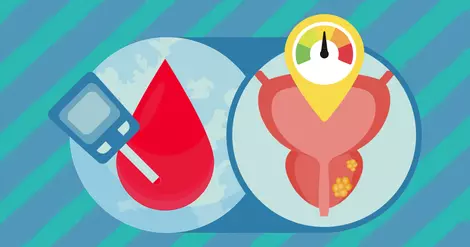
One common screening tool is the prostate-specific antigen (PSA) blood test. PSA is a protein made by the prostate gland. Higher PSA levels may be linked to prostate cancer, but they can also be caused by noncancerous conditions such as benign prostatic hyperplasia (BPH), also called prostate enlargement or prostate inflammation. If PSA levels are elevated, additional tests may be needed to confirm a diagnosis.
Routine osteoporosis screening is often recommended around age 70 for men, according to Johns Hopkins — or earlier if there are certain risk factors, such as long-term ADT or a history of fractures.
A dual-energy X-ray absorptiometry (DEXA or DXA) scan is commonly used to screen for osteoporosis by measuring bone mineral density. It’s important to note that a DXA scan is different from a bone scan (also called bone scintigraphy). A bone scan looks for signs that cancer may have spread to the bones, while a DXA scan checks bone strength and fracture risk.
Screening can help identify osteoporosis even before a fracture occurs. Some research shows a connection between DEXA screening and a lower risk of major bone fractures with prostate cancer.
If you have prostate cancer, talk to your doctor about your osteoporosis risk. They may suggest osteoporosis screening if you’re currently undergoing ADT or any other prostate cancer treatment that reduces bone mineral density.
Your doctor might prescribe medications called bisphosphonates if you have bone metastases or already have osteoporosis. Bisphosphonates help slow bone breakdown, allowing bones to retain more calcium and stay stronger. You may need to take a calcium and vitamin D supplement to replace the calcium in your blood.
Taking steps to manage or prevent prostate cancer and osteoporosis at the same time can help you avoid bone fractures that limit mobility and impact your quality of life.
On MyProstateCancerTeam, people share their experiences with prostate cancer, get advice, and find support from others who understand.
Which similarities have you noticed between prostate cancer and osteoporosis? Let others know in the comments below.
Get updates directly to your inbox.



 Continue with Facebook
Continue with Email
Continue with Facebook
Continue with Email
Continue with Facebook
Continue with Email
Continue with Facebook
Continue with Email
Become a member to get even more





 Join
Join

 Your Privacy Choices

This is a member-feature!
Sign up for free to view article comments.
Medical sex therapist recommenations
We'd love to hear from you! Please share your name and email to post and read comments.
You'll also get the latest articles directly to your inbox.