
Powered By



 Continue with Facebook
Continue with Email
Continue with Facebook
Continue with Email
A prostate biopsy is a short test done as an outpatient. A doctor takes a small sample of tissue and looks at it under a microscope. You can go home the same day. The biopsy helps your doctor find out if the tissue contains cancer. When a doctor is checking for prostate cancer, a biopsy is usually not the first step.
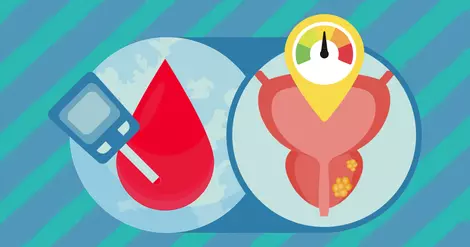
A prostate biopsy is usually just one step in the diagnosis process. Other steps may include a digital rectal exam (DRE), prostate-specific antigen (PSA) blood test, and imaging tests like a transrectal ultrasound or an MRI.
A biopsy is done to confirm whether you have prostate cancer. Doctors may recommend a biopsy if other tests suggest cancer, such as:
A DRE is a test where the doctor checks the prostate gland for size or unusual changes by gently inserting a gloved finger into the rectum. Abnormalities found in this exam may be a sign of cancer. A PSA test measures the amount of PSA protein in the bloodstream. High PSA protein levels could show a higher prostate cancer risk. Imaging exams can help to point out areas that should be sampled for biopsy or show how much the cancer has spread.
There are two types of prostate biopsies that your doctor may recommend. They are:
During the procedure, a transrectal ultrasound probe (TRUS) is often used to help guide the doctor in real time. A TRUS is a small probe that is placed into the rectum to take images of the prostate. A thin needle is used to remove small tissue samples. Typically, a biopsy will take 10 to 15 minutes to collect 12 to 20 samples. Collecting more samples can make the test more accurate.
A common concern about a prostate biopsy is pain. Before the procedure, a local anesthetic is used to numb the area surrounding the prostate. This will help to reduce pain, but you may still have some discomfort.
Recovery after a biopsy is usually quick. Most people return to normal activities within a day. Though recovery is minimal, you may experience some common short-term side effects. These may include:
Side effects usually improve on their own. However, drinking more water, avoiding heavy lifting or strenuous exercise, and abstaining from sex help with recovery. It’s normal to have discomfort after the procedure, but there shouldn’t be pain.
If you feel sore afterward, ask your doctor if you can take an over-the-counter pain reliever. You’ll receive antibiotics to lower the risk of infection before and after the biopsy. Although the risk of infection is low, it’s important to take the prescribed antibiotic.
Contact your doctor right away if you develop any of the following:
These symptoms could be a sign of a complication or an infection.
After the samples are taken, they’re reviewed by a pathologist, a doctor who specializes in examining tissue. The results of the biopsy can tell your care team more than just the blood and imaging test results.
Besides helping your doctor confirm whether you have cancer, a biopsy can also show how fast-growing the cancer seems to be and how much of the prostate is affected. Your biopsy results may say negative for cancer, positive for cancer, or suspicious or atypical.
If cancer is detected, your doctor will also look at your lab results for the full story (PSA levels and imaging). In addition, they’ll look at other risk factors like age, race, family history, and overall health. This information helps to identify the cancer stage and the next steps. A biopsy doesn’t determine treatment, but it does help to create a care plan. In some cases, a low-grade finding may lead to monitoring rather than treatment. Shared decision-making is important in choosing a care plan that makes you and your doctor feel more confident.
A Gleason score is an important part of the biopsy report. It grades the cancer cells found in the biopsy and helps your doctor understand how likely the cancer is to grow and spread. A higher score usually means the cancer may grow faster. This system is reported as Grade Group 1 through Grade Group 5. It may also be listed as a Gleason score from 6 to 10. Lower Grade Groups or scores are more likely to respond well to treatment.
Grade Group 1 means the cancer is less likely to grow quickly. Grade Groups 2 and 3 mean there is a moderate risk of faster growth. Grade Group 4 means there is a high risk of faster growth. Grade Group 5 means the highest risk.
A negative biopsy result doesn’t always completely rule out prostate cancer. Negative results mean there were no cancer cells found in the tissue sampled. However, because of the small sample size taken during the biopsy process, cancer cells could be missed. Your doctor will interpret the results of the biopsy along with your lab tests and other risk factors.
In some cases, doctors may still suspect cancer with a negative biopsy. This doesn’t mean that the biopsy failed, just that the doctor would like to do more testing to confirm the results.
If this happens, your doctor may want to continue PSA monitoring, repeat imaging tests, or get a second biopsy in a different area. Continued monitoring could help with early detection or help avoid unnecessary treatment.
In some cases, your biopsy may detect cells that are abnormal, but it may not indicate cancer. Pathologists will describe these findings as atypical or suspicious for cancer.
Prostatic intraepithelial neoplasia (PIN) is a condition where the prostate cells are shaped differently, but unlike cancer, these cells have not grown or spread to healthy tissues. There are two types of PIN: low-grade and high-grade. Low-grade PIN does not carry a risk of developing cancer and generally does not require treatment. High-grade PIN may raise concern for cancer, especially if it’s found in more than one area of the prostate.
Another possible finding is atypical small acinar proliferation (ASAP). This happens when cells may look cancerous under a microscope, but there aren’t enough to be sure. If ASAP is found, there’s a higher chance that there is prostate cancer.
Proliferative inflammatory atrophy (PIA) develops when the prostate cells appear smaller than normal, and they are inflamed. It’s not clear whether PIA can lead to high-grade PIN or prostate cancer.
Because atypical or suspicious findings could mean that cancer was missed on the first biopsy, your doctor may recommend a repeat biopsy or closely monitor your prostate with PSA tests and new imaging. About 40 to 50 out of 100 men with an atypical result will have cancer found on a later biopsy.
A prostate biopsy can sound intimidating, but it’s a common test that helps doctors better understand what’s going on. The results are just one part of the bigger picture and are used along with other tests and health factors. If you have questions or concerns, talking with your doctor can help you understand your results and decide what to do next.
On MyProstateCancerTeam, people share their experiences with prostate cancer, get advice, and find support from others who understand.
What’s one surprising detail your doctor has shared while helping you understand your prostate cancer? Let others know in the comments below.
Get updates directly to your inbox.


 Continue with Facebook
Continue with Email
Continue with Facebook
Continue with Email
Continue with Facebook
Continue with Email
Continue with Facebook
Continue with Email
Become a member to get even more





 Join
Join

 Your Privacy Choices

This is a member-feature!
Sign up for free to view article comments.
We'd love to hear from you! Please share your name and email to post and read comments.
You'll also get the latest articles directly to your inbox.